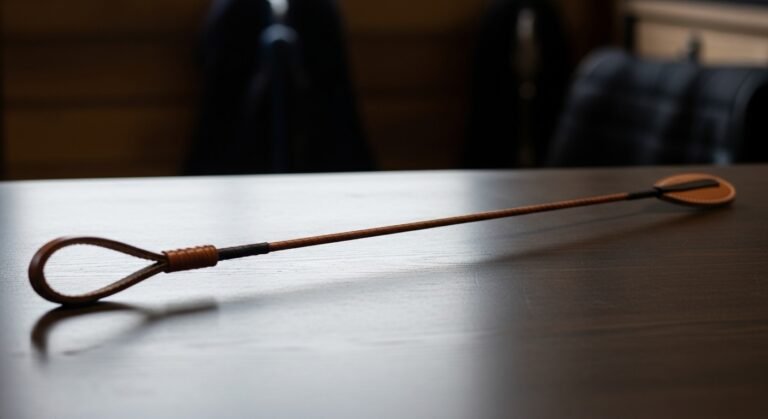
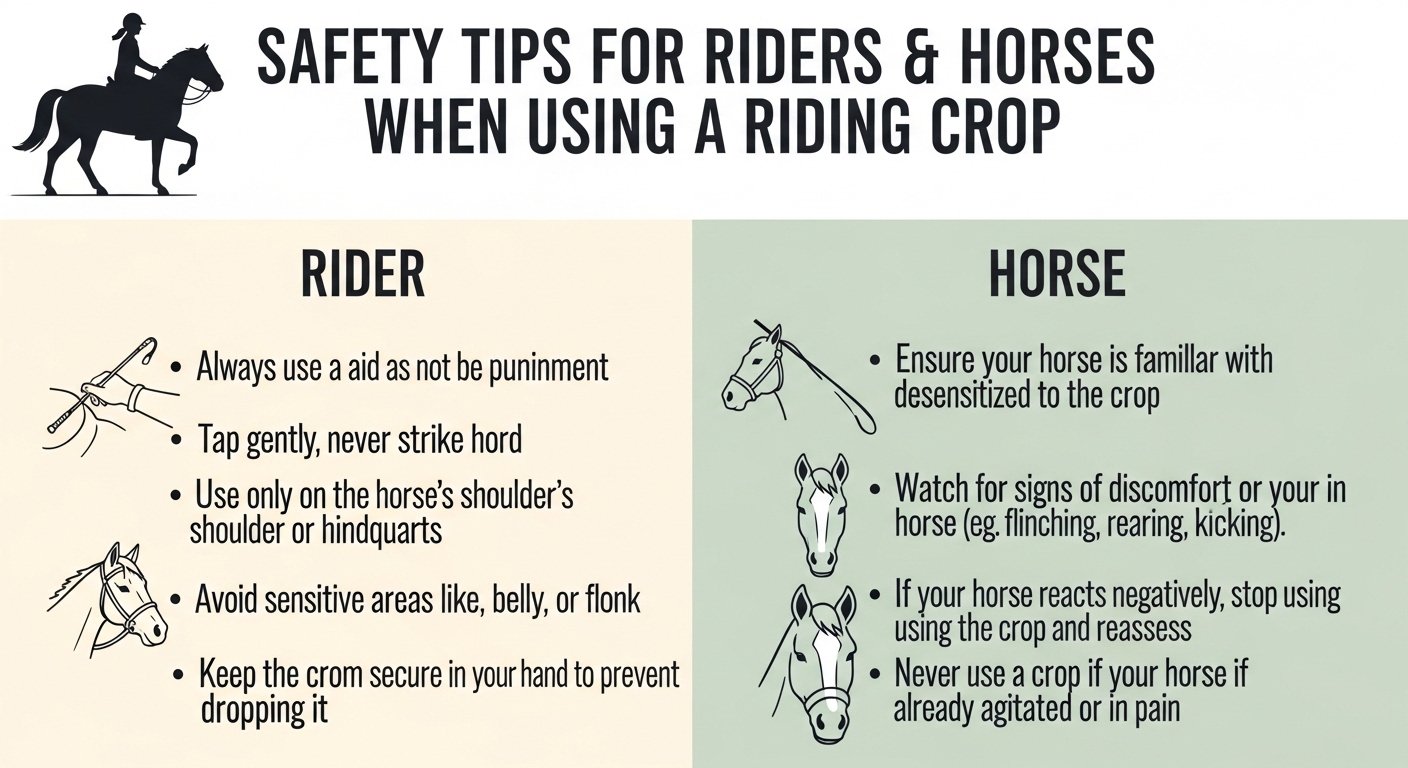
Riding crop is not a punishment tool. When used properly, it acts as a communication aid reinforcing leg aids, improving responsiveness, and supporting clear rider cues. When misused, however, it can cause confusion, fear, physical discomfort, or even injury.
This comprehensive guide provides in-depth safety tips for riders and horses when using a riding crop, covering proper technique, common mistakes, ethical considerations, and best practices across different riding disciplines.
Understanding the Purpose of a Riding Crop
Before focusing on safety, it is important to understand why riding crops exist and how they are intended to be used.
A riding crop is designed to:
- Reinforce leg aids
- Improve clarity of communication
- Encourage forward movement
- Support training consistency
- Enhance rider precision
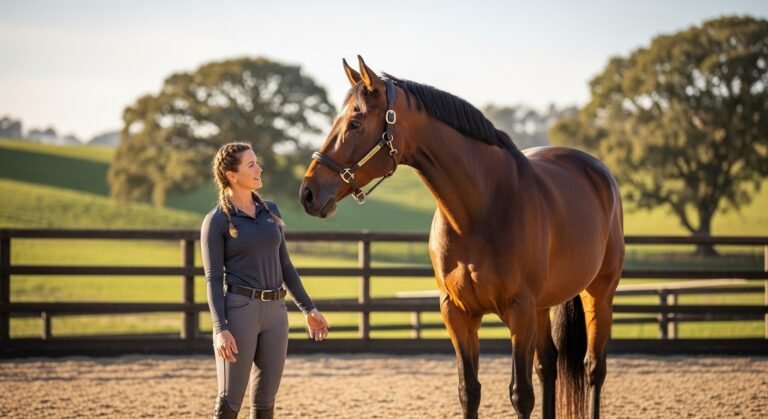
It should never be used to express frustration or anger. Horses are sensitive, intelligent animals that respond best to calm, consistent cues.
When riders understand the crop as a communication extension, safety naturally improves.
Choosing the Right Riding Crop for Safety
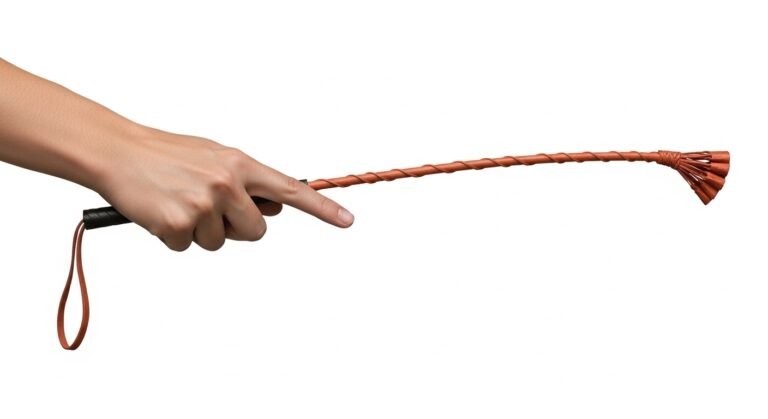
1. Select the Correct Length
Using the wrong crop length can compromise balance and control.
- Short crops (18–22 inches): Ideal for jumping and general riding
- Medium crops (24–26 inches): Suitable for flatwork
- Dressage whips (39–43 inches): Designed for advanced dressage training
A crop should allow you to reach the intended area without shifting your seat or posture.
2. Choose Safe Materials
Look for:
- Flexible shafts
- Smooth, rounded tips
- Non-abrasive coverings
- Secure wrist loops
Avoid crops with:
- Sharp edges
- Excessively stiff cores
- Damaged or cracked handles
A damaged riding crop should be replaced immediately to prevent injury.
Rider Safety Tips When Using a Riding Crop
1. Maintain Correct Hand Position
Hold the crop:
- Lightly, without tension
- Parallel to your leg
- Secure but relaxed
Your wrist should remain neutral. Over-tight gripping can cause accidental strikes and rider fatigue.
2. Preserve Balance and Posture
Never reach backward aggressively with a crop. If you lose balance while using it, you risk:
- Pulling on the reins
- Leaning forward
- Startling the horse
Good balance equals better communication.
3. Wear Proper Riding Gear
For maximum safety:
- Certified riding helmet
- Gloves for grip
- Boots with heels
- Appropriate riding attire
Protective equipment reduces the risk of injury if the horse reacts unexpectedly
Horse Safety Tips When Using a Riding Crop
1. Understand Equine Sensitivity
Horses have highly sensitive skin, especially along:
- The flanks
- The hindquarters
- The shoulders
Even light contact can feel strong to a horse. Use minimal pressure at all times.
2. Apply the Crop as a Signal, Not Force
The riding crop should:
- Follow a ignored leg aid
- Be quick and light
- Stop immediately once the horse responds
Repeated or heavy use can cause:
- Stress
- Fear responses
- Loss of trust
3. Watch Your Horse’s Body Language
Signs of discomfort include:
- Tail swishing
- Ear pinning
- Tensing muscles
- Rushing forward
If these occur, reassess your approach immediately.
Ethical and Humane Riding Crop Use
Ethical equestrianism prioritizes horse welfare above performance.
Key Ethical Principles:
- Use the crop only as a last reinforcement
- Never strike in anger
- Never hit sensitive areas (face, neck, spine)
- Never use excessive force
- Stop immediately after response
Many professional riding organizations emphasize that effective riding requires less equipment, not more pressure.
Common Mistakes to Avoid When Using a Riding Crop
1. Overusing the Crop
Excessive use leads to desensitization. Horses may:
- Ignore the crop
- Become tense
- Develop behavioral issues
2. Using the Crop Without Leg Aids
The crop should always support, not replace, leg communication.
3. Inconsistent Signals
Inconsistent timing confuses horses and increases stress.
4. Using a Crop on a Fearful Horse
A frightened horse needs reassurance not correction.
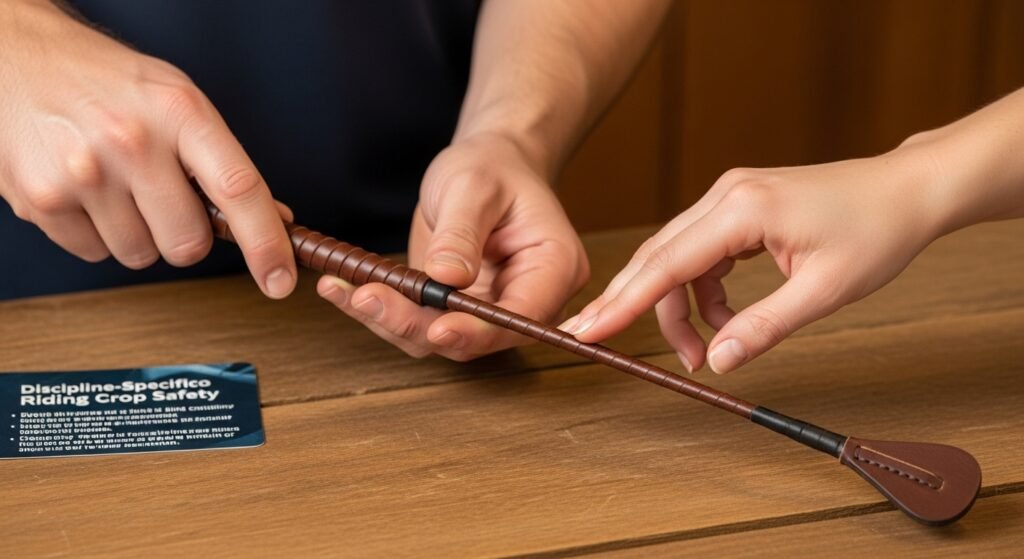
Discipline-Specific Riding Crop Safety
English Riding
- Short, light crops preferred
- Subtle reinforcement
- Used mainly behind the leg
Jumping
- Crop used sparingly
- Avoid mid-air contact
- Focus on rhythm and balance
Dressage
- Whips used as extension of leg
- No striking motion
- Precision over pressure
Trail Riding
- Often unnecessary
- Avoid startling wildlife or horses
- Prioritize calm communication
Training Young or Green Horses Safely
Young horses require extra care.
Best practices include:
- Introduce the crop slowly
- Let the horse see and smell it
- Start with gentle taps
- Reward positive responses
- Pair crop use with voice cues
Patience is critical during early training stages.
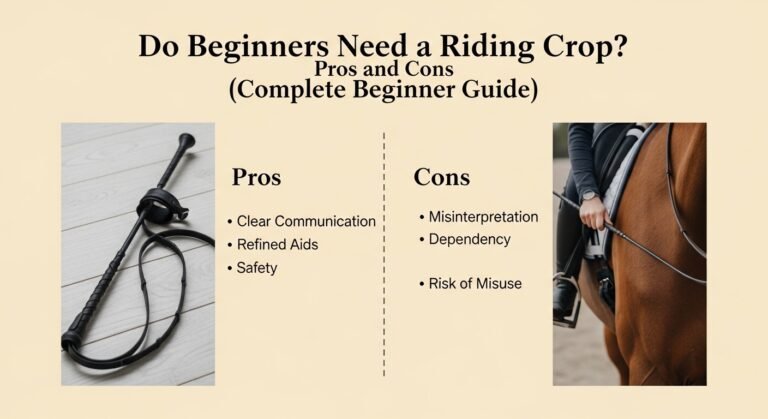
Riding Crop Safety for Beginners
If you are new to riding:
- Seek professional instruction
- Learn crop handling on the ground
- Practice without contact first
- Focus on leg and seat aids
Beginner riders benefit most from learning communication, not correction.
Riding Crop Maintenance and Storage Safety
A poorly maintained crop can cause injury.
Maintenance Tips:
- Inspect regularly for cracks
- Clean after use
- Store in a dry area
- Avoid extreme heat or moisture
Proper storage extends lifespan and ensures reliability.
Legal and Competition Guidelines
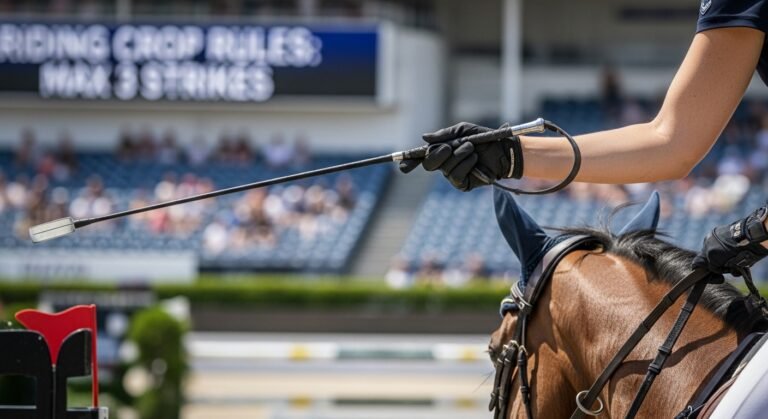
Many competitions regulate crop use:
- Maximum length restrictions
- Limited number of strikes
- Penalties for misuse
Always check event rules to ensure compliance and avoid disqualification.
Building Trust Without Overreliance on a Crop
The best riders use the crop less over time, not more.
Focus on:
- Consistent training
- Clear aids
- Positive reinforcement
- Groundwork
- Rider fitness and balance
A well-trained horse responds to subtle cues not force.
Frequently Overlooked Safety Considerations
- Never hand a crop to a child unsupervised
- Avoid swinging or playing with the crop
- Do not leave crops where horses can step on them
- Never use broken equipment
Small precautions prevent serious accidents.
Conclusion:
Using a riding crop responsibly enhances communication, improves training outcomes, and strengthens the bond between horse and rider. Safety begins with education, empathy, and restraint.
A riding crop is a tool not a weapon. When used ethically and skillfully, it supports harmony, trust, and mutual respect.