Horse riding is built on communication, balance, and trust between rider and horse. While reins, leg aids, and voice cues play the biggest role, certain tools help riders communicate more clearly and effectively. One of the most common and often misunderstood tools is the riding crop.
Many beginners think a riding crop is used to punish horses. In reality, when used correctly, it is simply a training aid and communication tool that helps reinforce signals.
In this complete guide, you will learn everything about riding crops from their history and types to proper use, safety rules, materials, and expert tips.
Whether you’re a beginner or experienced rider, this guide will help you use a riding crop responsibly and confidently.
What Is a Riding Crop?
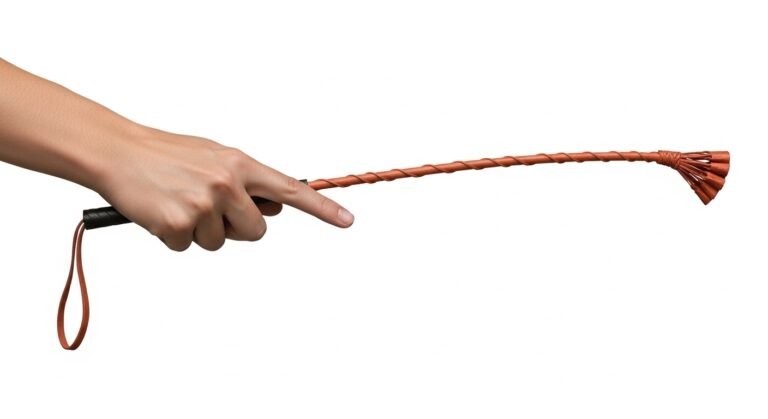
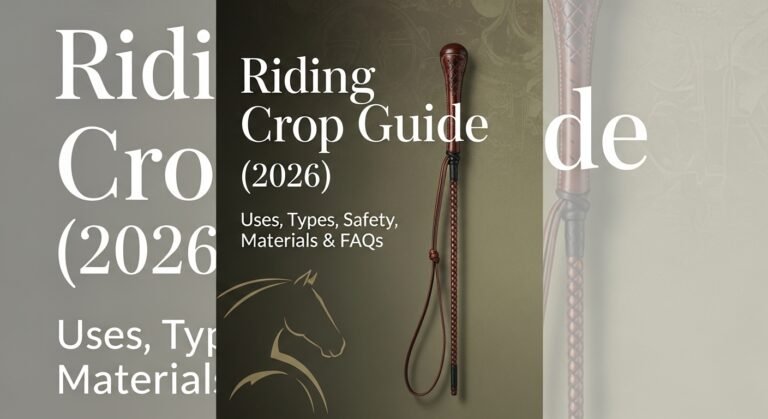
Riding crop is a short, lightweight stick used in horseback riding to support communication between the rider and the horse.
It is not meant to cause pain or fear.
Instead, it acts as:
- An extension of the rider’s arm
- A reinforcement of leg aids
- A gentle reminder for responsiveness
- A training support tool
A riding crop typically includes:
- Handle or grip
- Flexible shaft
- Leather flap or popper
With proper timing and light pressure, even the smallest tap is enough for a horse to understand the signal.
History of Riding Crops
Riding crops have existed for centuries.
In ancient times:
- Riders used simple sticks or switches
- Soldiers guided horses during travel and battle
- Shepherds used light tools for control
As horsemanship developed, tools evolved to become:
- Lighter
- More flexible
- Safer
- More humane
Modern riding crops focus on communication, not force. Today’s equestrian communities strongly emphasize ethical use and horse welfare.
Difference Between Crop, Whip, and Bat
Many riders confuse these tools. However, each serves a different purpose.
Riding Crop
- Short length
- Close contact
- Everyday riding
- Jumping and general training
Dressage Whip
- Longer design
- Extended reach
- Used in dressage
- Allows precise cues without moving hands
Jumping Bat
- Short and thick
- Durable
- Used in show jumping
- Stronger for quick reinforcement
Quick Comparison
| Tool | Length | Best For |
|---|---|---|
| Crop | Short | General riding |
| Whip | Long | Dressage |
| Bat | Short & thick | Jumping |
Choosing the correct tool depends on your riding discipline.
Parts of a Riding Crop
Understanding the structure helps you choose better quality equipment.
Handle
Comfortable grip, often rubber or leather-wrapped.
Shaft
Flexible core made of fiberglass or cane.
Keeper/Loop
Wrist strap for secure handling.
Popper
Small leather flap at the tip that creates sound and gentle contact.
Each part is designed for control, comfort, and safety.
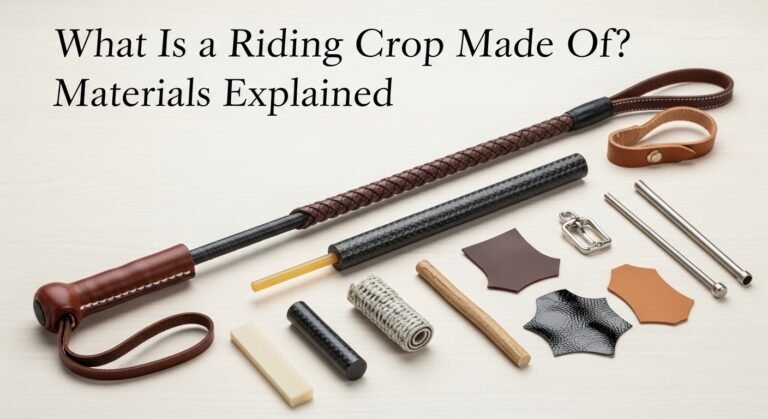
Materials Used in Riding Crops
Modern riding crops are made from various materials.
Common Materials
Leather
- Classic look
- Durable
- Professional appearance
Fiberglass
- Lightweight
- Flexible
- Long-lasting
Synthetic
- Affordable
- Weather-resistant
- Beginner-friendly
Rubber grips
- Prevent slipping
- Improve control
Choose materials based on comfort, durability, and riding style.
Lengths & Standards
Riding crop length varies depending on discipline.
Standard Sizes
- 18–24 inches → general riding
- 16–20 inches → jumping
- 36–48 inches → dressage whip
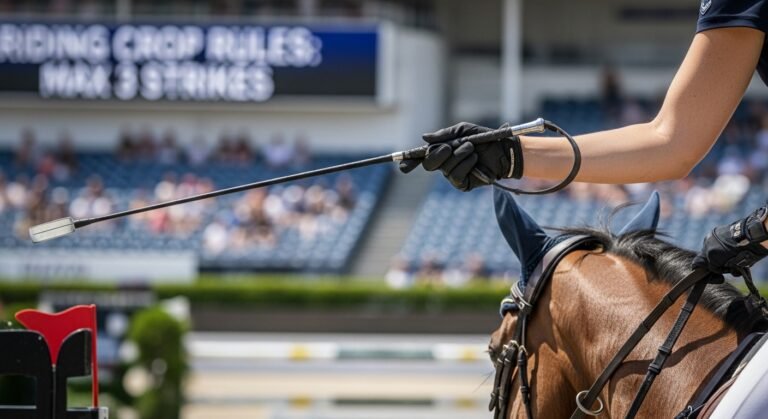
Some competitions enforce length restrictions, so always check the rules before events.
For beginners, 20–22 inches is usually ideal.
Uses of Riding Crops in Equestrian Sports
A riding crop is used across many equestrian activities.
Show Jumping
Helps encourage forward movement before obstacles.
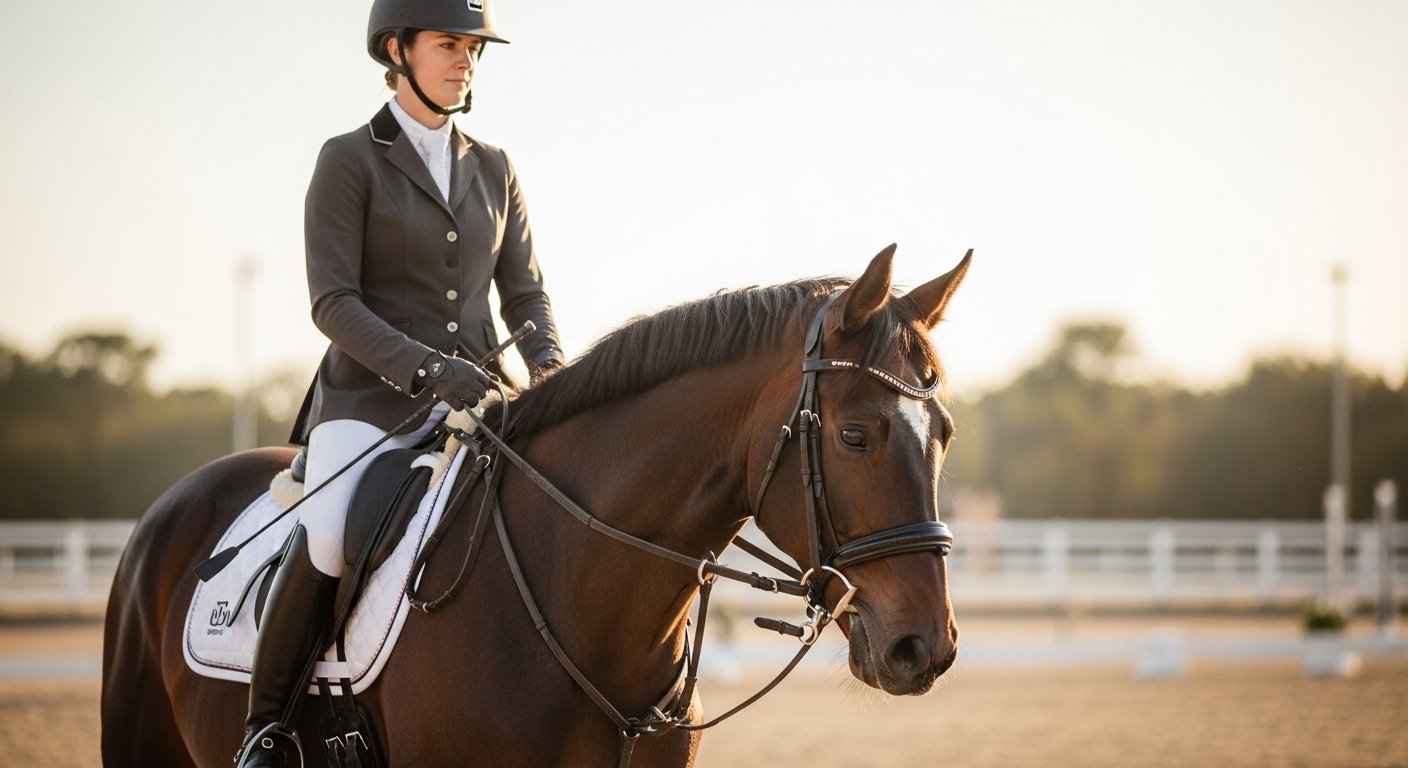
Dressage
Supports precision and responsiveness.
Trail Riding
Assists with light guidance when needed.
Horse Training
Improves obedience and focus.
Racing
Soft bats follow strict welfare regulations.
In every discipline, the crop is used lightly and responsibly.
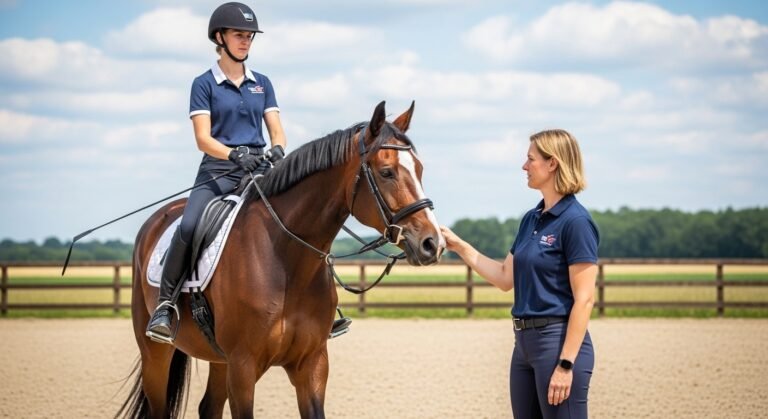
How to Use a Riding Crop Properly
Correct technique is more important than the tool itself.
Step-by-Step Method
- Give leg cue first
- If no response → gentle tap
- Stop immediately when horse reacts
- Reward with relaxed reins
Never strike repeatedly.
The goal is communication, not punishment.
Experienced riders barely tap timing matters more than force.
Safety Rules for Riding Crops
Horse welfare always comes first.
Follow These Rules
- Use light taps only
- Never hit sensitive areas
- Stay calm and patient
- Avoid anger-based actions
- Stop once horse responds
- Replace damaged crops
- Follow competition guidelines
A calm rider creates a calm horse.
Misuse & Common Misconceptions
Unfortunately, riding crops are often misunderstood.
Misconception 1: Crops are for punishment
Wrong
They are for communication only.
Misconception 2: Harder hits work better
Wrong
Horses respond to timing, not force.
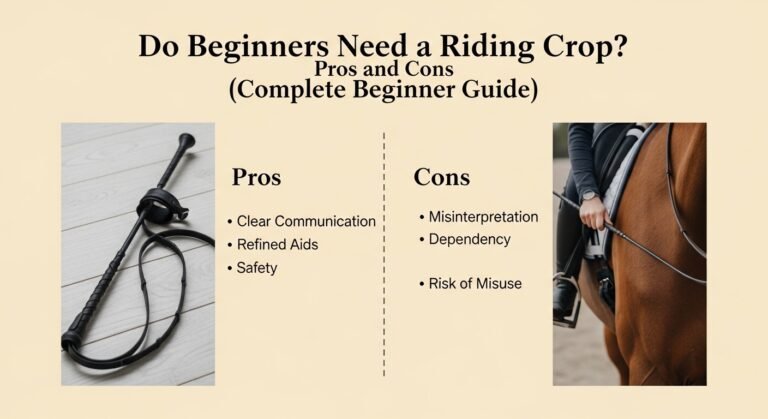
Misconception 3: Beginners shouldn’t use crops
Not true
They can be helpful when taught properly.
Misuse Includes
- Excessive force
- Striking repeatedly
- Using out of frustration
- Causing fear or injury
Misuse damages trust and slows training progress.
How to Choose the Right Riding Crop
Here’s what to consider before buying:
Length
Match your riding discipline.
Weight
Lightweight reduces fatigue.
Grip
Non-slip handles improve control.
Quality
Strong stitching and flexible shaft last longer.
Comfort
Must feel natural in your hand.
Always prioritize quality over price.
Caring for Your Riding Crop
Proper care increases lifespan.
Cleaning
Wipe with damp cloth after riding.
Storage
Hang straight to avoid bending.
Inspection
Check stitching and shaft regularly.
Replacement
Discard cracked or damaged crops.
Well-maintained equipment stays safe and effective.
Benefits of Using a Riding Crop
When used correctly, benefits include:
- Clear communication
- Faster responsiveness
- Better training results
- Improved control
- Increased rider confidence
- Safer riding
It becomes a helpful support tool rather than a necessity.
FAQs About Riding Crops
Q1: Does a riding crop hurt horses?
Ans: No. Light taps are painless and only reinforce cues.
Q2: Can beginners use a crop?
Ans: Yes, with proper guidance and gentle technique.
Q3: What length is best?
Ans: Around 20–22 inches for most riders.
Q4: Is a riding crop required?
Ans: Not always. It’s optional but helpful.
Q5: Are crops allowed in competitions?
Ans: Usually yes, but length and usage may be regulated.
Q6: Crop vs whip which is better?
Ans: Crop for general riding, whip for dressage.
Conclusion:
A riding crop is one of the simplest yet most misunderstood tools in horseback riding.
When used ethically and responsibly, it:
- Improves communication
- Supports training
- Builds responsiveness
- Protects safety
Remember:
Good horsemanship is about patience, timing, and respect never force.
Choose the right crop, use it gently, and prioritize your horse’s comfort above all.
With proper knowledge and technique, a riding crop becomes a trusted partner in your riding journey.