Horse riding has always balanced skill, communication, and trust between horse and rider. Yet one topic continues to spark debate among beginners, parents, animal lovers, and even experienced competitors:
Is using a riding crop cruel?
Some see it as unnecessary or harsh. Others consider it a standard training aid that improves clarity and safety. The truth lies somewhere in the middle and it depends entirely on how, why, and when the riding crop is used.
In this in-depth guide, we’ll explore:
- What a riding crop actually does
- Ethical vs unethical use
- Myths and misunderstandings
- Professional rules and regulations
- Humane training alternatives
- When a crop is helpful (and when it isn’t)
- Expert tips for responsible riders
This SEO-optimized article is designed to help riders make informed, ethical, and compassionate decisions while still improving performance and communication.
What Is a Riding Crop?
A riding crop is a short, lightweight training aid that extends a rider’s leg cues. It is not meant to punish or cause pain.
Simple definition
A riding crop:
- Reinforces leg aids
- Improves timing and clarity
- Helps with focus and responsiveness
- Supports training consistency
Think of it like a pointer or tap, not a whip for striking.
Common types
- Schooling crop
- Jumping bat
- Dressage whip
- Lunge whip (ground training)
Each has a specific purpose and length.
Why Do Riders Use a Crop at All?
Many beginners assume:
“If you ride well, you shouldn’t need a crop.”
This sounds logical but it’s not realistic.
Even very skilled riders use crops because horses are:
- Large (500+ kg animals)
- Strong
- Sometimes distracted or lazy
- Sometimes overly energetic
A crop helps deliver clear, immediate communication.
Practical reasons riders carry one
- Encouraging forward movement
- Reinforcing a leg aid that was ignored
- Preventing refusal at a jump
- Maintaining rhythm in dressage
- Improving safety in crowded arenas
Used properly, it prevents confusion, not causes harm.
The Big Question: Is It Cruel?
Short answer:
No — not when used correctly.
Yes — when used incorrectly.
Cruelty depends on intent and technique, not the tool itself.
A riding crop becomes cruel when:
- Used in anger
- Used repeatedly or excessively
- Causes fear or pain
- Leaves marks
- Replaces proper training
But when used lightly and responsibly, it’s simply a communication aid.
Ethical vs Unethical Crop Use
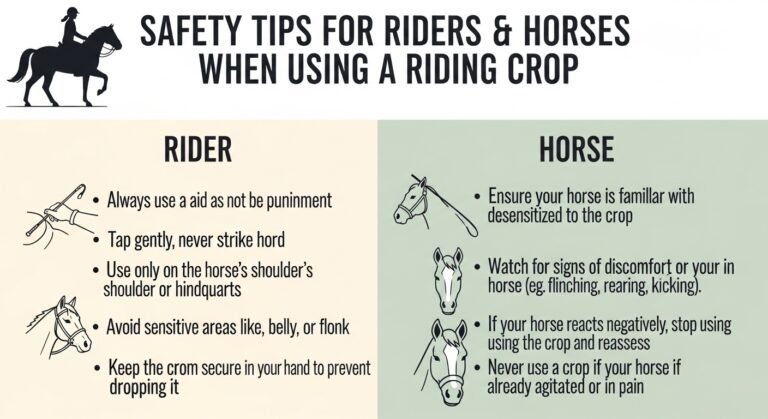
Ethical Use
- Light tap only
- Immediate release of pressure
- Calm, neutral emotion
- Reinforces a clear leg cue
- Horse stays relaxed and confident
Unethical Use
- Hitting hard
- Repeated striking
- Using out of frustration
- Punishment after mistakes
- Horse shows fear or stress
If a horse becomes scared or tense, something is wrong.
Ethical riding always prioritizes welfare first, performance second.
What Do Professionals and Rules Say?
Competitive equestrian sports follow strict welfare regulations. Organizations like Fédération Équestre Internationale (FEI) set clear limits.
Typical rules include:
- Maximum whip length
- Limited number of strikes
- No striking the head or sensitive areas
- Immediate penalties for abuse
- Disqualification for excessive force
If crops were inherently cruel, they wouldn’t be allowed at international competitions.
Instead, they are regulated tools, just like spurs or bits.
Common Myths About Riding Crops
Myth 1: “It’s basically hitting the horse”
Not true. A correct tap is light and symbolic.
Myth 2: “Good riders never carry crops”
Even Olympic riders use them responsibly.
Myth 3: “Horses feel severe pain”
A soft crop tap is similar to a firm finger poke.
Myth 4: “It’s always punishment”
It’s usually reinforcement or reminder.
Understanding these myths helps reduce emotional reactions and focus on facts.
When Is a Riding Crop Actually Helpful?
1. Encouraging lazy horses
Some horses ignore leg aids. A light tap reminds them to move forward.
2. Preventing jump refusals
A quick cue helps maintain momentum and safety.
3. Clarifying signals for beginners
New riders often give unclear leg pressure. A crop provides clarity.
4. Groundwork training
Used as an extension of the arm to guide movement safely.
5. Safety situations
Better communication reduces dangerous misunderstandings.
In many cases, a crop actually reduces stress, because the horse understands faster.
Signs You’re Using a Crop Correctly
Look for these positive indicators:
- Horse remains relaxed
- No pinned ears
- No tail swishing
- No fear responses
- Immediate soft response
- No marks on skin
If your horse stays calm and cooperative, your technique is likely humane.
Signs of Misuse or Cruelty
Stop immediately if you notice:
- Flinching
- Fear or anxiety
- Head tossing
- Trying to escape
- Angry reactions
- Skin redness or marks
These mean the crop is causing discomfort or fear.
Training should build trust, not break it.
Humane Training Alternatives
If you prefer not to use a crop, that’s completely fine. Many riders train successfully without one.
Alternatives include:
- Voice commands
- Better seat aids
- Stronger leg technique
- Positive reinforcement
- Clicker training
- Groundwork exercises
However, even riders who avoid crops should understand they aren’t automatically cruel tools.
It’s about method, not morality.
Psychology: How Horses Perceive the Crop
Horses learn through:
- Pressure and release
- Timing
- Consistency
A quick, light tap followed by release tells the horse:
“Respond faster next time.”
It’s communication, not punishment.
Long, repeated strikes are what create fear.
So psychology supports short, clear signals only.
Beginner Mistakes to Avoid
If you’re new, avoid these common errors:
- Carrying crop without knowing how to use it
- Swinging wildly
- Using when frustrated
- Depending on it too much
- Skipping proper leg training
A crop should be backup, not your main tool.
Think:
Leg → reminder → tiny tap (if ignored)
Never the other way around.
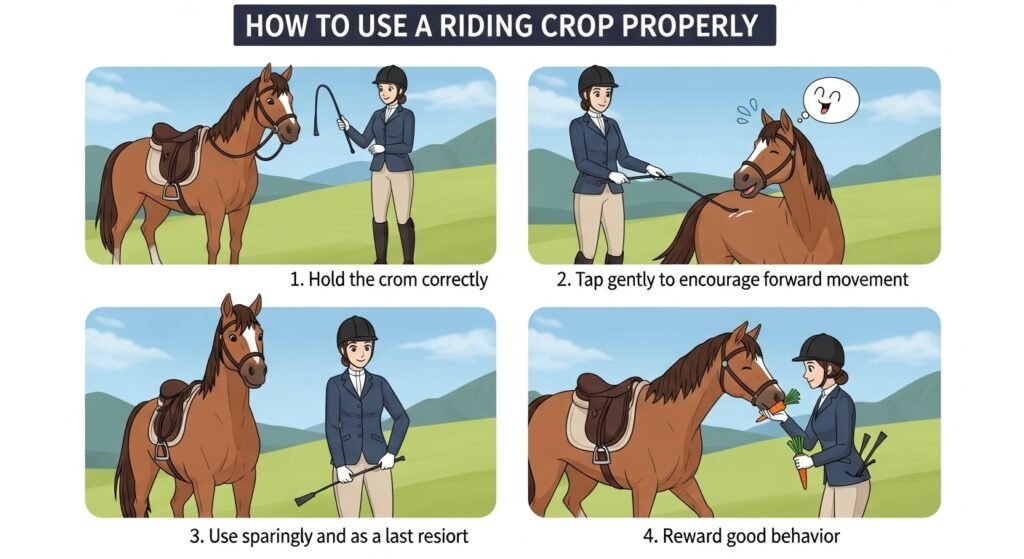
How to Use a Riding Crop Properly (Step-by-Step)
- Give leg aid first
- Wait one second
- If ignored → light tap
- Horse responds → stop immediately
- Reward with softer reins
Timing is everything.
Late correction confuses horses.
Ethical Riding Principles to Follow
Every responsible rider should remember:
- Welfare > Winning
- Communication > Force
- Training > Punishment
- Patience > Frustration
If you ride with these values, cruelty is unlikely.
The Modern View of Equestrian Ethics
Today’s equestrian world focuses more on:
- Horse welfare
- Positive training
- Science-based methods
- Emotional well-being
- Ethical competition
Cruel methods are being phased out.
Modern riders aim for partnership, not dominance.
A crop used ethically fits into this compassionate model.
So… Should You Use One?
Here’s a balanced answer:
Use a crop if:
- You understand correct technique
- You ride responsibly
- You need clearer communication
- You stay calm
Avoid it if:
- You feel angry
- You’re unsure how to use it
- Your horse is sensitive
- You rely on it constantly
Tools don’t define cruelty behavior does.
Conclusion:
So, is using a riding crop cruel?
No not when used ethically, lightly, and responsibly.
A riding crop is simply a communication aid. In skilled hands, it improves clarity and safety. In careless hands, it becomes unfair.