
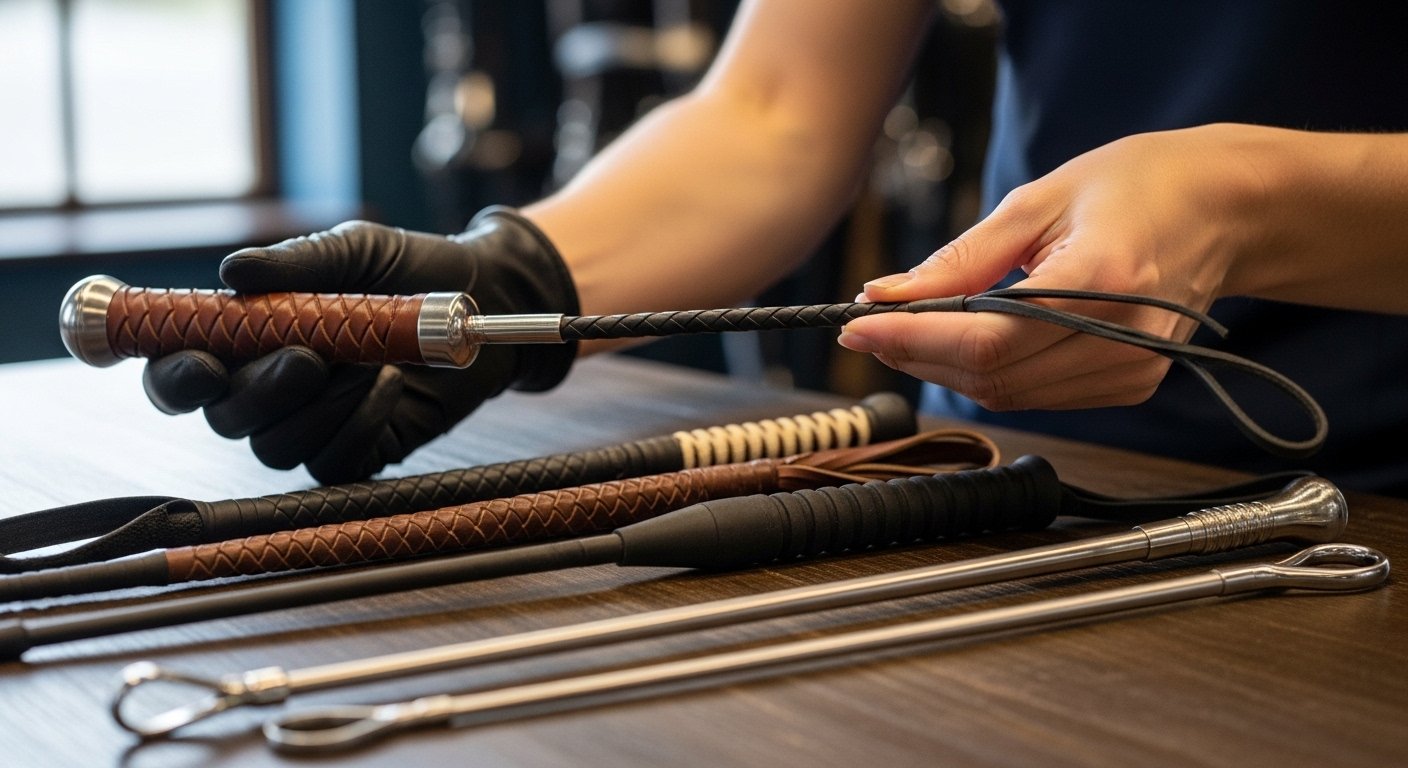
Horseback riding is an elegant sport that blends communication, skill, and trust between horse and rider. While reins, leg aids, and voice cues are the primary tools, riding crops serve as an essential aid for reinforcement. One key question many riders have is: how much does a riding crop weigh? The weight of a riding crop influences its flexibility, comfort, and effectiveness.
In this detailed guide, we’ll explore riding crop weights, types, materials, and factors that affect their weight to help you choose the right crop for your riding style and your horse’s needs.
Why Riding Crop Weight Matters
Riding crops are communication tools, not instruments of punishment. The weight of a crop determines how easily it can be wielded, how flexible it is, and how comfortable it feels in the rider’s hand. A lightweight crop allows fast, precise signals, while a heavier crop may provide more tactile feedback but can tire the rider faster.
Understanding crop weight ensures you select a crop that enhances your riding without causing fatigue or discomfort to you or your horse.
Anatomy of a Riding Crop
A typical riding crop consists of three main parts:
- Handle: The grip held by the rider, affecting comfort and control.
- Shaft: The main body, providing flexibility and reach.
- Popper / Tip: The small end that contacts the horse, delivering signals.
Each part contributes to the overall weight of the crop.
Average Weight of Riding Crops
The weight of a riding crop can vary depending on its design and materials, but generally:
- Standard riding crops: 150–250 grams (0.33–0.55 lbs)
- Lightweight crops: 100–150 grams (0.22–0.33 lbs)
- Heavier training or show crops: 250–350 grams (0.55–0.77 lbs)
The length of the crop (usually 18–30 inches) also slightly affects weight, with longer crops being a bit heavier.
Factors That Affect Riding Crop Weight
Shaft Material
The shaft is the largest contributor to crop weight:
- Fiberglass: Lightweight, flexible, and common for everyday riding.
- Carbon Fiber: Extremely light and durable, ideal for competitive riding.
- Rattan / Cane: Natural and slightly heavier, traditional option.
- Aluminum: Lightweight and sturdy, less common.
Handle Material
The handle affects grip and comfort:
- Leather: Comfortable but slightly heavier than synthetic options.
- Rubber / Synthetic: Lightweight, anti-slip, and low-maintenance.
- Wood: Heavier but traditional and sturdy.
Popper / Tip Material
The popper adds minimal weight but impacts feel and feedback:
- Leather popper: Slightly heavier, soft impact.
- Synthetic popper: Lightweight, durable, consistent contact.
- Rubber tip: Very light, gentle for sensitive horses.
Length and Design
- Shorter crops are lighter and easier to maneuver.
- Longer crops may weigh more but provide extended reach.
- Decorative or reinforced designs may add small weight increments.
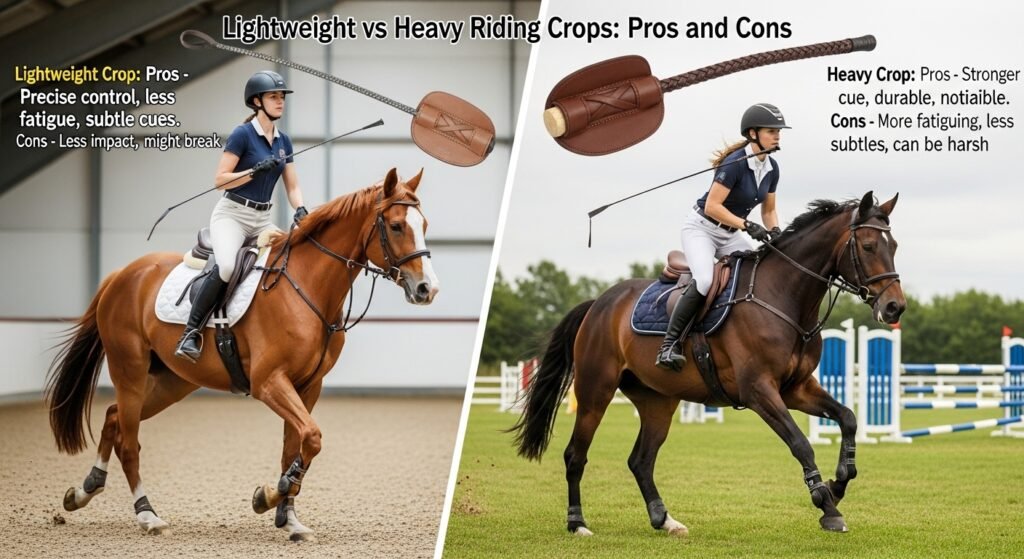
Lightweight vs Heavy Riding Crops: Pros and Cons
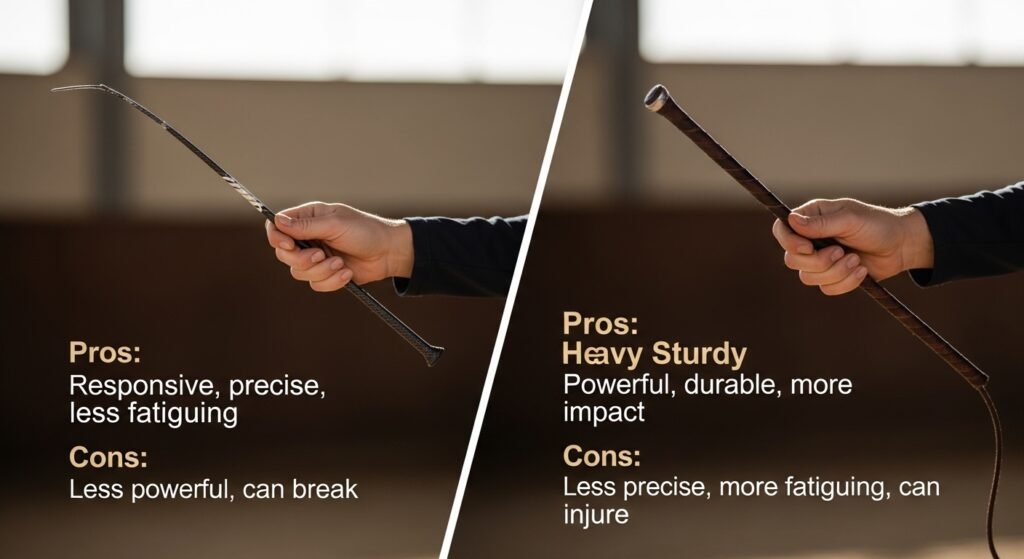
Lightweight Crops:
- Pros: Fast, precise, easy to carry, reduces rider fatigue.
- Cons: Less tactile feedback, may feel flimsy for some riders.
Heavier Crops:
- Pros: Provides more feel and feedback, traditional aesthetic.
- Cons: Can tire the rider, slower movement, less suitable for fast maneuvers.
How Riding Crop Weight Affects Horse and Rider
- Rider Comfort: A crop that is too heavy can strain the wrist or arm during long sessions.
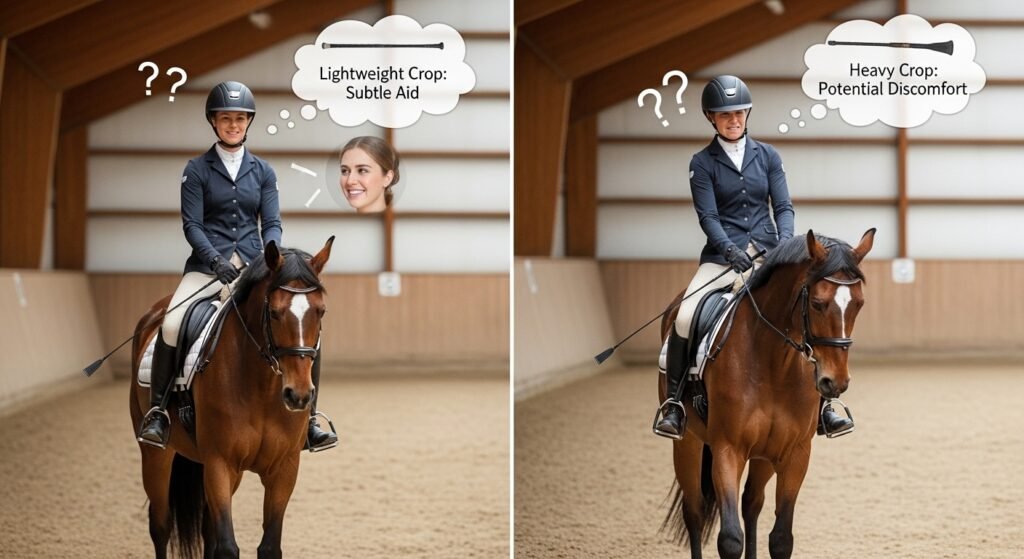
- Horse Responsiveness: Lightweight crops allow subtle, quick signals, while heavier crops deliver more pronounced taps.
- Precision: Lighter crops are ideal for dressage or show jumping where accuracy matters.
The weight of a riding crop impacts both rider comfort and horse responsiveness. Lightweight crops allow quick, precise signals and reduce rider fatigue, while heavier crops provide more tactile feedback but can tire the rider. Choosing the right weight ensures effective communication without stressing either horse or rider.
Choosing the correct weight ensures effective communication and reduces the risk of mis-signaling.
Choosing the Right Weight for Your Riding Style
- Beginners: Lightweight crops (100–180 grams) for easy handling.
- Competition Riders: Medium to lightweight crops (150–250 grams) for precision and speed.
- Training Young or Sensitive Horses: Lightweight crops with soft tips minimize stress.
- Show or Eventing: Heavier crops (250–350 grams) can provide more presence without excessive fatigue.
Selecting the right riding crop weight depends on your experience and riding discipline. Beginners benefit from lightweight crops for easy control and less fatigue. Competition riders often prefer medium-weight crops for precision and speed, while heavier crops can provide more presence in shows or training sessions. Always match crop weight to your comfort, horse’s sensitivity, and riding style.
Maintenance Tips to Keep Your Crop Lightweight
- Store crops in a cool, dry place to avoid material warping.
- Regularly check the shaft for cracks or bends that could affect weight and performance.
- Condition leather handles to prevent them from becoming stiff and heavy.
- Replace worn poppers to maintain consistent weight and feel.
Proper maintenance ensures the crop stays as lightweight and functional as designed.
Keep your riding crop in top shape by storing it in a cool, dry place, checking the shaft for cracks, conditioning leather handles, and replacing worn poppers. Proper care ensures it stays lightweight, durable, and effective for every ride.
Popular Riding Crop Brands and Their Weights
- Stubben: Leather handle, rattan or synthetic shaft, ~200–250 grams.
- Kieffer: Traditional cane with leather popper, ~220–300 grams.
- Professional’s Choice: Fiberglass or synthetic shafts, lightweight ~150–200 grams.
Choosing a reputable brand ensures consistent weight, quality, and durability.
FAQs About Riding Crop Weight
Q1: Does crop weight matter for beginners?
Ans: Yes, lightweight crops are easier to control and reduce fatigue, making them ideal for beginners.
Q2: Can a heavy crop hurt my horse?
Ans: Not if used correctly, but heavier crops are better for experienced riders who can deliver controlled signals.
Q3: How do I measure my crop’s weight?
Ans: Use a kitchen or digital scale for accurate measurement. Include shaft, handle, and popper.
Q4: Are carbon fiber crops lighter than fiberglass?
Ans: Yes, carbon fiber is usually the lightest, providing excellent durability and fast responsiveness.
Q5: Should I change crop weight for different disciplines?
Ans: Yes, dressage favors lighter crops for precision, while eventing may use slightly heavier crops for presence.
Conclusion:
The weight of a riding crop plays a crucial role in rider comfort, precision, and horse responsiveness. Whether you choose a lightweight fiberglass crop, a carbon fiber competition crop, or a traditional cane crop, understanding how materials, shaft length, handle, and tip affect weight ensures you make the best choice for your riding style.
By selecting the right weight and maintaining your riding crop, you enhance communication, performance, and safety for both you and your hors