Horseback riding is a graceful sport that combines skill, trust, and communication between the rider and the horse. While riders rely on body cues, leg aids, and voice commands, tools like a riding crop play a crucial role in enhancing communication and reinforcing signals. But have you ever wondered what a riding crop is made of and why its materials matter? In this guide, we’ll explore the composition, construction, and variations of riding crops to help riders understand their importance.
Riding Crops in Horse Riding:
A riding crop is not a tool of punishment. Instead, it is a communication aid used to reinforce the rider’s leg cues, encourage responsiveness, and guide the horse. A well-designed riding crop allows precise control without causing pain or fear. The materials used in a riding crop are crucial, as they determine its flexibility, durability, weight, and grip.
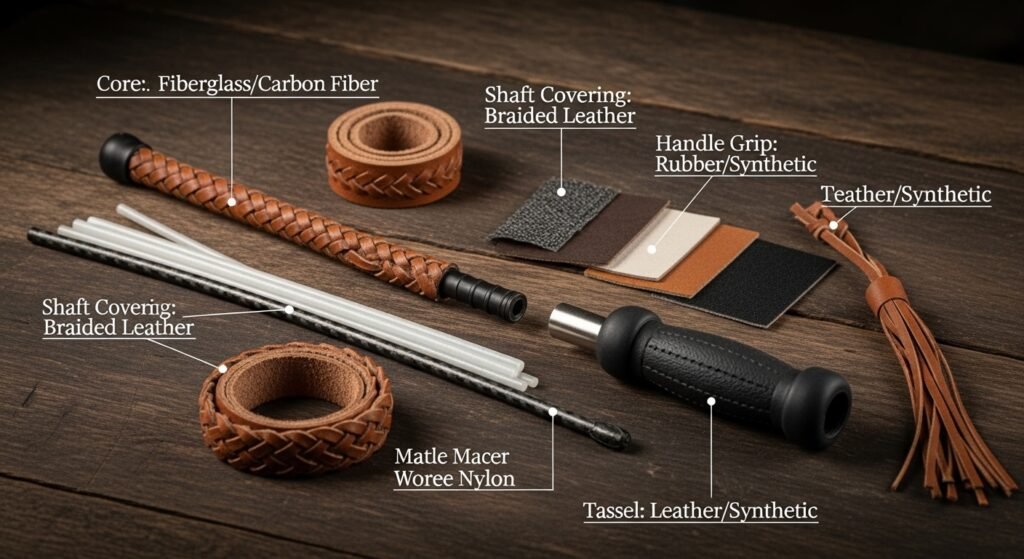
Whether you are a beginner or an experienced equestrian, understanding the construction and materials of riding crops helps you choose the right one for your horse riding activities, competitions, or training sessions.
Anatomy of a Riding Crop
Before diving into materials, let’s understand the basic parts of a riding crop:
- Handle: The grip area held by the rider.
- Shaft: The main body of the crop, providing flexibility and reach.
- Keeper / Popper / Tip: The small piece at the end that makes contact with the horse.
Each part can be made from different materials, affecting comfort, efficiency, and safety.
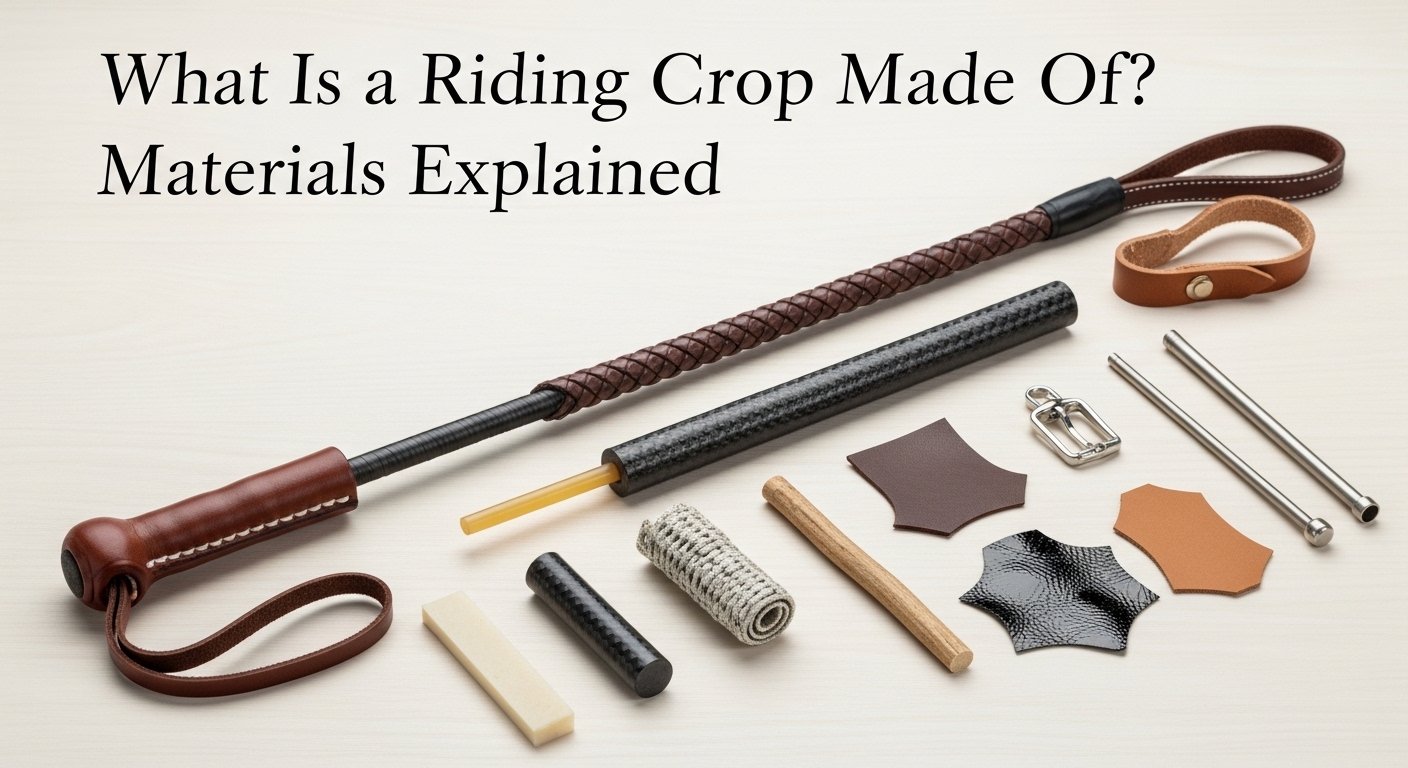
Common Materials Used in Riding Crops
Riding crops can be made from a variety of materials. The selection depends on the intended use, rider preference, and horse sensitivity.
Shaft Materials
The shaft is the backbone of the riding crop. It needs to be lightweight yet strong and have the right amount of flexibility. Common shaft materials include:
- Fiberglass:
- Lightweight and flexible
- Resistant to bending or breaking
- Affordable
- Ideal for training and casual riding
- Carbon Fiber:
- Extremely strong and durable
- Lightweight, allowing for fast and precise movement
- Slightly more expensive
- Often used in competitive riding
- Rattan / Cane:
- Traditional material
- Flexible and natural
- Provides a classic feel for experienced riders
- Less durable than modern materials
- Aluminum:
- Lightweight and strong
- Resistant to weather and wear
- Usually combined with a synthetic or rubber handle for grip
Handle Materials
The handle is the rider’s contact point, so comfort and grip are essential. Common materials include:
- Leather Wrap:
- Offers excellent grip and classic look
- Absorbs sweat for better handling
- Requires maintenance to avoid cracking
- Rubber or Synthetic Grip:
- Durable and water-resistant
- Provides anti-slip surface
- Low maintenance, ideal for all-weather use
- Wood:
- Traditional and sturdy
- Often paired with leather or rubber overlay
- Can be heavier than modern alternatives
Popper or Tip Materials
The tip, often called the keeper or popper, is what makes contact with the horse. Its material determines sound, flexibility, and safety:
- Leather Popper:
- Classic choice for durability
- Produces a soft, precise “tap”
- Requires occasional conditioning
- Synthetic Popper:
- Lightweight and weather-resistant
- Produces consistent contact
- Less maintenance required
- Rubber Tip:
- Extra safety for young or sensitive horses
- Soft impact
- Can reduce sound for quiet training
Natural vs Synthetic Materials
Riding crops can be broadly divided into natural materials (like leather, rattan, wood) and synthetic materials (like fiberglass, carbon fiber, rubber).
- Natural Materials:
- Traditional appearance
- Often preferred in competitions and shows
- Requires more care to maintain durability
- Synthetic Materials:
- Lightweight and durable
- Less prone to wear or environmental damage
- Easier to clean and maintain
The choice between natural and synthetic often depends on personal preference, budget, and riding discipline.
How Materials Affect Performance and Durability
Different materials directly impact the flexibility, reach, and durability of riding crops:
- Flexibility: Fiberglass and rattan offer excellent springiness for a smooth action.
- Durability: Carbon fiber and synthetic shafts resist wear and bending.
- Grip Comfort: Leather and rubber handles reduce fatigue and prevent slipping.
- Impact: Leather poppers create a precise tap, while rubber tips soften the impact.
Riders should choose materials that match their riding style, horse sensitivity, and training needs.
Choosing the Right Riding Crop Material for Your Horse
Here are some tips to help you select the right crop material:
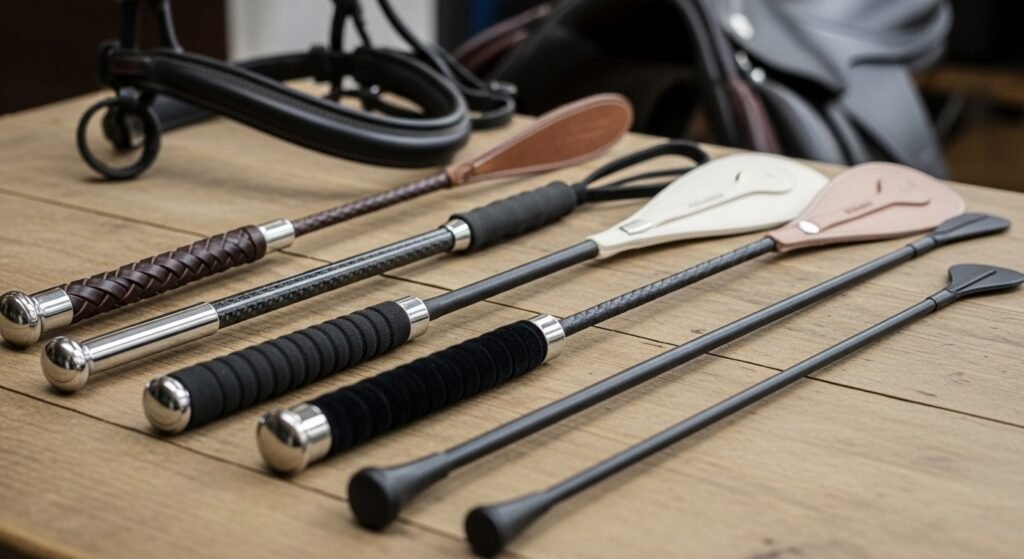
- Beginner Riders: Lightweight fiberglass or synthetic crops with rubber handles are ideal.
- Competition Riders: Carbon fiber shafts with leather handles and poppers provide precision.
- Young or Sensitive Horses: Use crops with soft rubber tips to minimize discomfort.
- Durability Seekers: Synthetic shafts resist environmental damage better than natural rattan.
Maintenance and Care of Riding Crops
Proper maintenance extends the life of your riding crop:
- Clean leather handles with a damp cloth and condition regularly.
- Store crops away from direct sunlight to prevent cracking.
- Inspect shafts for bends or damage before each ride.
- Replace worn poppers to ensure safety and proper function.
A well-maintained crop provides consistent performance for years.
History of Riding Crop Materials
Historically, riding crops were made from natural cane and leather, valued for flexibility and durability. As equestrian sports evolved, synthetic materials like fiberglass and carbon fiber became popular, offering better performance, lighter weight, and lower maintenance. Today, riders can choose from a wide range of materials based on personal preference, horse temperament, and riding discipline.
Popular Brands and Material Choices
Some renowned brands that focus on material quality include:
- Stubben: Known for high-quality leather handles and durable shafts.
- Kieffer: Offers a mix of traditional cane and modern synthetic options.
- Professional’s Choice: Popular for fiberglass and synthetic crops with excellent flexibility.
Choosing a reputable brand ensures the use of high-quality materials and consistent manufacturing standards.
Safety Considerations Based on Materials
Material choice impacts safety:
- Avoid brittle or cracked shafts they can break mid-ride.
- Ensure leather handles are not slippery.
- Use rubber tips for inexperienced horses or riders.
- Regularly check synthetic shafts for signs of wear or stress.
Safe materials combined with proper technique make riding crops an effective and humane training tool.
FAQs About Riding Crop Materials
Q1: Are synthetic riding crops better than leather ones?
Ans: Not necessarily. Synthetic crops are durable and low-maintenance, while leather crops offer better grip and traditional appeal. It depends on your riding needs.
Q2: What is the lightest material for a riding crop?
Ans: Carbon fiber is the lightest, followed by fiberglass. These materials offer flexibility without adding weight.
Q3: Can I use a riding crop on sensitive horses?
Ans: Yes, using a crop with a soft rubber tip or lightweight shaft reduces discomfort while maintaining communication.
Q4: How often should I replace the popper?
Ans: Inspect it regularly. Replace it when worn or cracked to ensure proper function and horse safety.
Q5: Is rattan better than fiberglass?
Ans: Rattan offers traditional flexibility and feel, while fiberglass is more durable and low-maintenance. Both are good choices depending on preference.
Conclusion
Riding crop is more than a tool it’s a communication bridge between rider and horse. Understanding what it’s made of and how materials affect performance is essential for both beginners and experienced equestrians. From fiberglass and carbon fiber shafts to leather handles and rubber tips, each material has a specific purpose that influences durability, comfort, and efficiency.